On this page
Before someone buys, they ask an AI assistant the same things they'd check on your product page. How much is it? Does it come in my size? Is it in stock? Can I return it?
Two things decide whether the assistant can answer. First, whether your product reaches the assistant at all. Second, whether the information it gets is right.
Here's what Shopify, Google and OpenAI say about both, what one recent study measured, and what to check on your own store.
Where AI assistants get your products
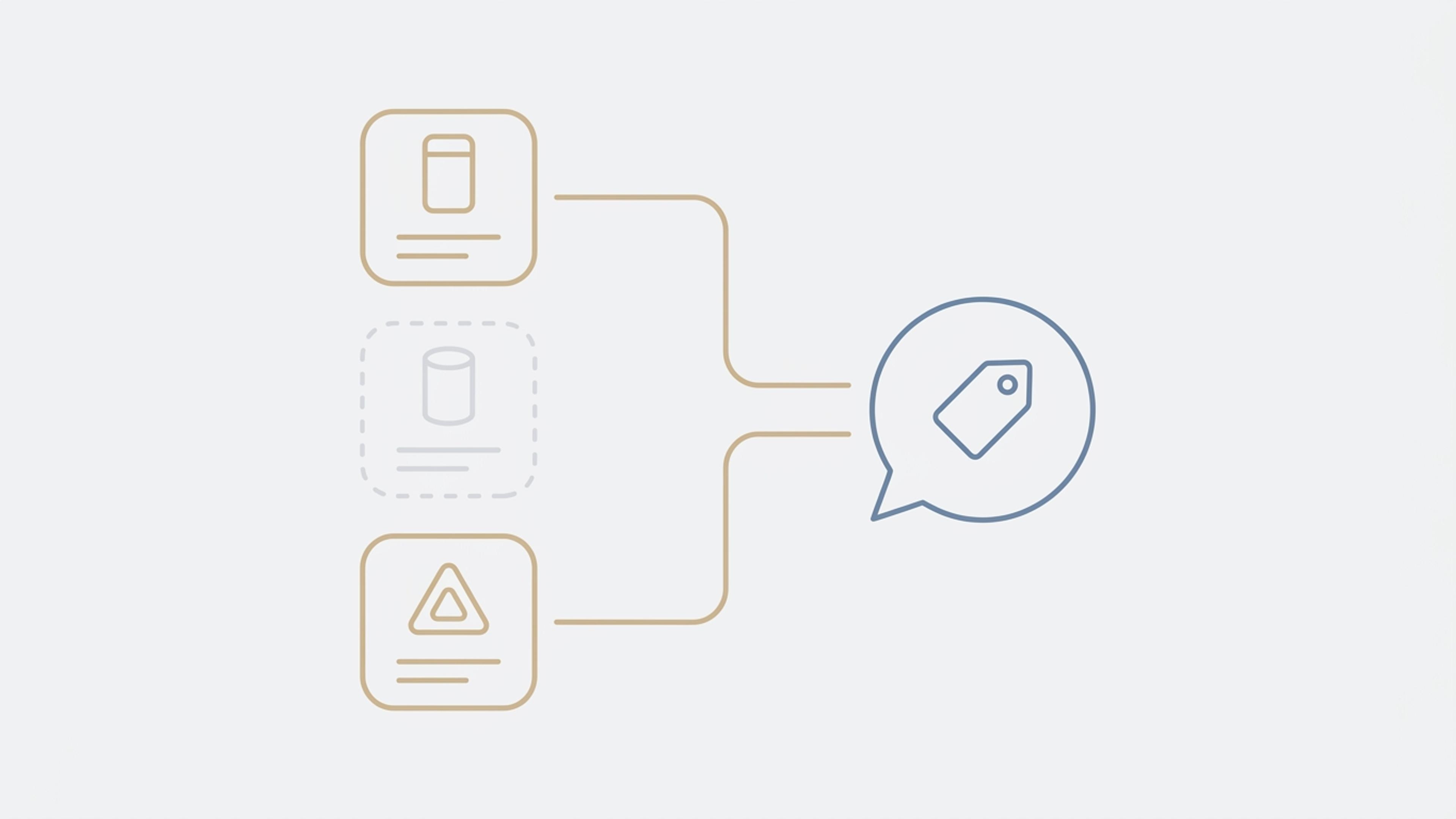
If you sell on Shopify, AI shopping channels get your products from Shopify Catalog. Shopify describes Catalog as "a structured source of product information" from stores on Shopify. It holds your titles, descriptions, images, prices, options and stock.
Shopify connects Catalog to AI channels through what it calls agentic storefronts. As of October 2026, Shopify's list of agentic storefronts covers ChatGPT, Google AI Mode and Gemini, Microsoft Copilot, and Meta's Muse. They're turned on by default for stores that qualify.
The rules differ by channel. To sell through ChatGPT, your store must sell to customers in the US, wherever the store is based. Google AI Mode and Gemini need a store based in the US that sells to the US. Its products also have to be in Google Merchant Center, Google's tool for listing products in its shopping results. Microsoft Copilot needs a store that sells to the US.
Shoppers can buy on all of them. On ChatGPT, they check out on your own store's checkout, opened inside ChatGPT. On Copilot and Google, they can buy right in the chat.
Shopify is clear about one thing. Being in Catalog "doesn't guarantee that a product will appear in a specific AI answer." Each channel decides what to show, and how to word it.
What gets a product left out
Shopify publishes the rules a product must meet to be in Catalog. A product is left out if it:
- has no title, or no product image
- has a price of 0
- is set to Unlisted, or hidden from search engines
- falls in a category Catalog doesn't allow
That last rule covers obvious ones, like alcohol and weapons. It also covers "Uncategorized products." And Shopify works out the category "from your product information, not only your admin category." So the category field isn't the whole story. What your title and description say counts too.
The store has rules as well. Every channel's help page asks for a completed return and refund policy, terms of service and privacy policy. Returns are one of the questions shoppers ask before they check out.
Google adds one more check. Your product feed is the file listing your products that you send to Google. If the price or stock in that feed doesn't match your product page, Google disapproves those products. Getting them back takes a review of 7 business days. If the review fails, you wait another 7 business days before you can ask again.
That matters for AI because Shopify requires your products to be in Google Merchant Center for Google AI Mode and Gemini. The store must also meet all of Google's Merchant Center rules.
Google and OpenAI also publish the product details they require. We went through those in what Google and OpenAI require from your product page.
What AI gets wrong about the rest
Getting in is half of it. The other half is whether AI repeats your product information correctly.
In September 2026, the web data company Infatica checked what ChatGPT, Gemini and Perplexity told shoppers about 45 products. It compared 826 of the assistants' claims with the live product pages.
For a product with one price, the assistants quoted the right price 97% of the time. For products with many variants, the sizes and colors of a product, that dropped to 68.5%. When a price was wrong, it was usually too low. Of the wrong prices, 62.5% were below the real one, by a median of 20%.
Stock answers were uneven too. When an assistant said a product was in stock, it was right 19 times out of 20. When it said a product was out of stock, it was wrong 43% of the time.
So the more sizes and colors a product has, the more often AI quoted the wrong price in this study.
The study has limits, and Infatica states them. It covers three days, one brand per category, and about a fifth of the claims it collected. It doesn't check sizes, shipping or returns. AI can get store facts wrong too, as a study of 72,000 AI answers about UK retailers found.
What to check on your store
- In your Shopify admin, open Sales channels, then Agentic. If your store doesn't qualify, Shopify shows the reason there, with a suggested fix.
- Check that every product has a title, at least one product image and a real price.
- Make sure each title and description say plainly what the product is. Shopify reads the category from them.
- Name your variant options plainly, like "Size" and "Color." Give each variant its own correct price and stock.
- Fill in your return and refund policy, terms of service and privacy policy.
- If you use Google Merchant Center, look for warnings about a price or stock that doesn't match your product page.
- Ask ChatGPT about one of your products that comes in several sizes or colors. Compare its answer with your product page.
If you're not sure where these details live in your Shopify admin, our guide to AEO for Shopify shows where your product data lives. To see what AI can find on your store today, run the free check.
What this doesn't settle
No platform says that complete product information gets a product recommended. Shopify, Google and OpenAI each say they decide what to show. What they do publish is the rules for getting in, and the checks that can take a product out.
The Infatica study is one three-day snapshot. And the channel rules change often. Everything above was checked in October 2026.